
UX
Posted on October 2, 2013 Leave a Comment
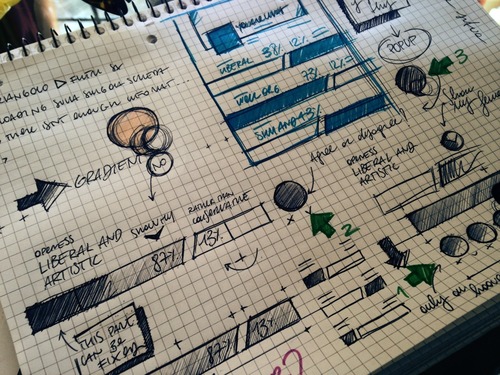
Ux design in Office today, we’re designing something beautiful. Stay tuned -studio2apiuc
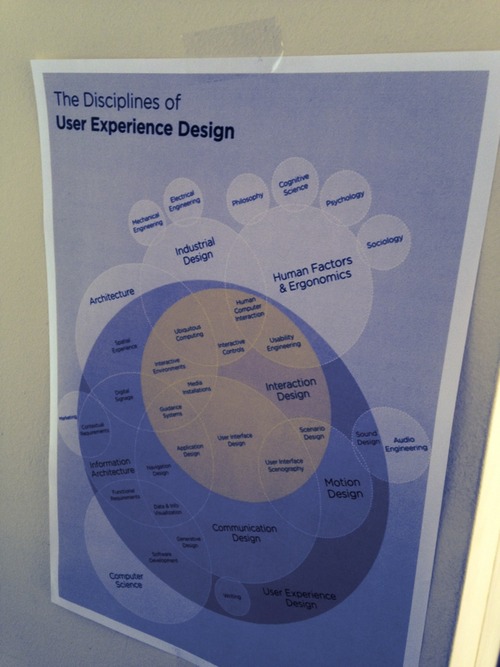
Posted on October 2, 2013 Leave a Comment
Solar Panel Inside Nivea Print Ad Generates Power to Charge Your Cell Phone.
“Giovanni + Draftfcb in São Paulo, Brazil, developed the ad, which includes a wafer-think solar panel and phone plug, to promote the Nivea Sun line of skincare products.”
For more details – click here.
ME: This is pretty incredible! Great job Nivea!
Posted on October 2, 2013 Leave a Comment
City Forward: An Award-Winning Lesson in the Use of Open Big Data | Citizen IBM Blog
Sponsored by IBM, the City Forward website can be used to compare a selected city’s characteristics and challenges to others around the world. In the process, users can identify trends, pinpoint similarities and get ideas for how a city may be improved. These city stories then can be shared and discussed within the City Forward Community.
Completely free of charge, City Forward connects to the work done bySmarter Cities Challenge teams around the world. The website provides data for more than 100 cities, and offers both city leaders and the public the unique ability to consolidate multiple data sources. The International Academy of Digital Arts and Sciences (IADAS) recently recognized City Forward with its 2013 Corporate Social Responsibility Webby Award.
Posted on October 2, 2013 Leave a Comment
Posted on October 2, 2013 Leave a Comment
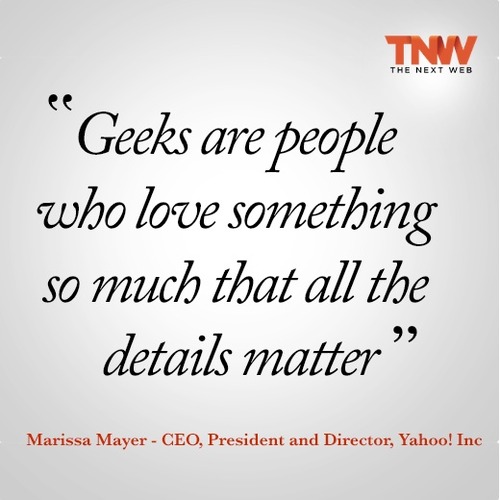
Would you agree with this observation by Marrisa Mayer?
Find more insightful quotes like these on our Pinterest Page
Matt
How To Be a Women Programmer
Posted on October 2, 2013 1 Comment
The second requirement is a high tolerance for failure. Programming is the art of algorithm design and the craft of debugging errant code.
[…]
Now to the “woman” question.
I broke into the ranks of computing in the early 1980s, when women were just starting to poke their shoulder pads through crowds of men. There was no legal protection against “hostile environments for women.” I endured a client — a sweaty man with pendulous earlobes — who stroked my back as I worked to fix his system. At any moment I expected him to snap my bra. I considered installing a small software bomb but understood, right then, what was more important to me than revenge: the desire to create good systems.
I had a boss who said flatly, “I hate to hire all you girls but you’re too damned smart.” By “all” he meant three but, at the time, it was rare to find even one woman in a well-placed technical position. At a meeting, he kept interrupting me to say, “Gee, you sure have pretty hair.” By then I realized he was teaching me a great deal about computing. It would be a complicated professional relationship, in which his occasional need for male dominance would surface.
So, on that day of my pretty hair, I leaned to one side and said, “I’m just going to let that nonsense fly over my shoulder.” The meeting went on. We discussed the principles of relational databases, which later led me to explore deeper reaches of programming, closer to operating systems and networks, where I would find my real passion for the work. My leaning to one side, not confronting him, letting him be the flawed man he was, changed the direction of my technical life.
”
| — | Pioneering software engineer Ellen Ullman, author of the fascinating Close to the Machine, on how to be a ‘woman programmer.’ Also see the letters of the women who helmed the tectonic cultural shift of the era Ullman describes. (via explore-blog) |

This n That
Posted on October 2, 2013 Leave a Comment
Hi There,
My name’s Alexis (lex) and this is my blog! I’m a USC Interactive Entertainment student currently exploring the intersection between content and platform.
WHICH, means that I’m interested in a whole slew of things including but not limited to: design, UX, UI, coding, graphic art, pop culture, entertainment, film, photography, typography, and some more ographies.
A while ago I read an article in LA Weekly that I think describes my personal life and interests perfectly: The Bay produces the platform while LA produces the content. I’m from the birth place of Silicon Valley (I grew up across the street from the P in HP) but now live and go to school in Los Angeles. I love the platform and the content equally and I want to find the happy medium between the two that doesn’t seem to exist up there or down here.
This microblog will function as a journal, brainstorm space, and a time capsule of my journey into this unknown.
Peace,
Lexinteractive
 lexinteractive